Travel to
Argentina
Buenos Aires Public
Transport
Find here what you should know about public transport in Buenos Aires - buses, trains, streetcars, subway (subte) and taxis to easily move in the city…..
Page 2
Travel to Argentina: Public Transport in Buenos Aires
There is no need to emphasize how important is public transport in so vast country as Argentina and so big and busy city as Buenos Aires. Fortunately I have plenty of good news for you.
- Public transport works very well – buses (called here
Collectivos) do not have the schedule, however if you miss one, most
likely the next one will come right away or in
the worst case in the next few minutes.
- When you see incoming bus, you have to wave your hand. Otherwise you may see its back down the street!
- Please note that Argentineans patiently wait in line (not only at the bus stop called here “Parada”). Take your place in the line and do not try to change this respectful habit!
- You buy the ticket in the bus after telling the driver where you go. However you have to have coins with you – bills are not accepted by tickets’ automats. If you travel with a partner, you will get one ticket for both of you (double price!). BTW – public transport is very cheap. Most of bus tickets within the city costs 1.20 AR pesos (about $0.30 US).
- Traffic in the city is well organized – overwhelming majority of streets are one way.
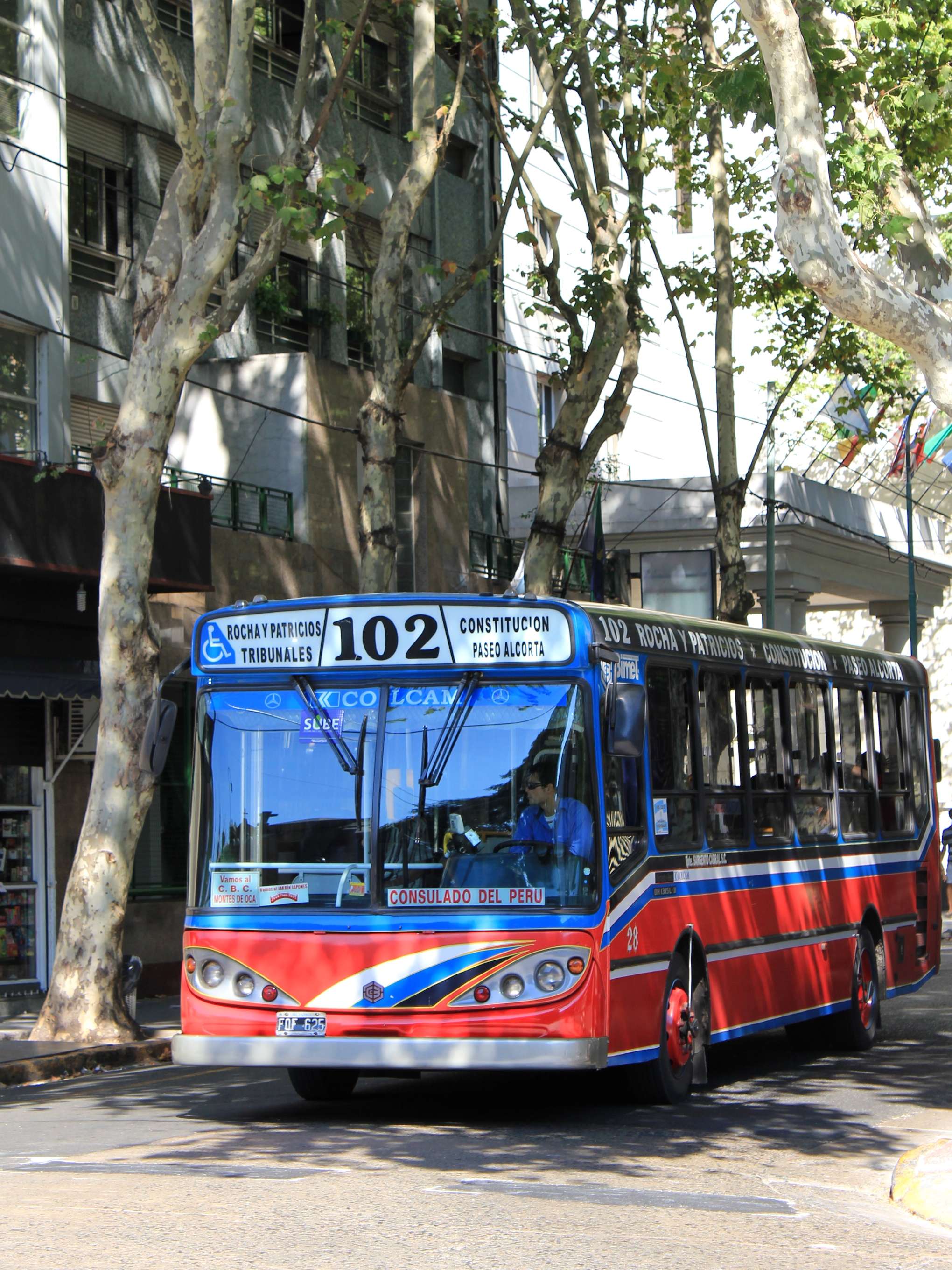
It makes it easier not only for drivers but also for pedestrians (you watch only one side before crossing the street).
But the trick is that once you want to go back home by the same bus
line, you have to figure out the bus itinerary and find the stop.
Thanks to the one-way streets your bus stop is definitely “somewhere
else”. This is a bit confusing, but hey – something for something.
Argentina Public Transport: Typical Buenos Aires city bus runs fast!
- Subway and trains are the living memory of the British influence. The road traffic in Argentina was reorganized from left-side driving to the right-one in early 40s (thanks God and Government of Argentina). However railroads did not undergo the same changes so they still keep left-side rules! And nothing indicates that it may change in the near future. It is confusing and if you do not pay attention when taking a “subte” (subway) or a local train then you risk ending-up somewhere else.
- Taxis seem to be safe (at least for rides inside of the city). Behind the windshield they use a confusing display "Libre" (available) in a red color instead of an expected green.

For better protection try to use Radio Taxis. There is a widespread although unverified opinion that these drivers are “more accountable”. All taxis charge according to the meter. By “western standards” Argentinean taxis are inexpensive!
Public transport:
All taxis in Buenos Aires have characteristic black-yellow colors
(exceptions are city suburbs where taxis may have different
colors - for example white).
- The easiest way to travel across Argentina is by air. If you are a member of one of US “frequent flyer” programs then try to fly by LAN airlines because they are associated with American Airlines (assuming the cost is comparable to what is offered by the Argentinean Airlines).
- Argentina has an excellent bus network reaching most important cities across the country. They are fast and comfortable and usually provide overnight service. Forget the pictures of colorfully ornamented buses with luggage and passengers on the roof – so well known from South-American movies. Today's long-distance buses are modern luxurious coaches (mainly Mercedes and Volvo) equipped with AC, large windows, huge luggage area, toilets and wide reclining seats allowing horizontal position (coche-cama) or a comfortable one (coche semi-cama). They are less expensive than air and allow you to see the whole country. I’m sure that this will be a great new experience for most of you, a one really worth to live.
- City is full of underground parking places under plazas, streets and majority of buildings. For security of pedestrians an acoustic signal and flashing red light are turned on when cars are leaving the parking. Thanks to the abundance of parking places (they are not free!) streets are largely free from parking cars. Unfortunately, it does not prevent traffic jams during rush hours.
- Many intersections do not have traffic lights for pedestrians. You have to watch traffic lights for cars (sometimes they are not well visible from your position at the edge of the sidewalk). The best solution is to watch cars (you watch only one side of the street). This practice allows also those in rush or just impatient to cross the street on “apparently” red lights. By saying so I’m NOT encouraging this habit, but just bringing you to the reality on the ground in Buenos Aires.
- Sidewalks seem to be part of facing them buildings. One visible result is that most sidewalks form a “mosaic” of colors, shapes and styles reflecting preferences and tastes of buildings’ administrators. Other side-effect is more painful – parts of the sidewalk along the block may be crystal-clean washed and polished to shine but then just the next section may look like affected by the yesterday’s earth-quake.
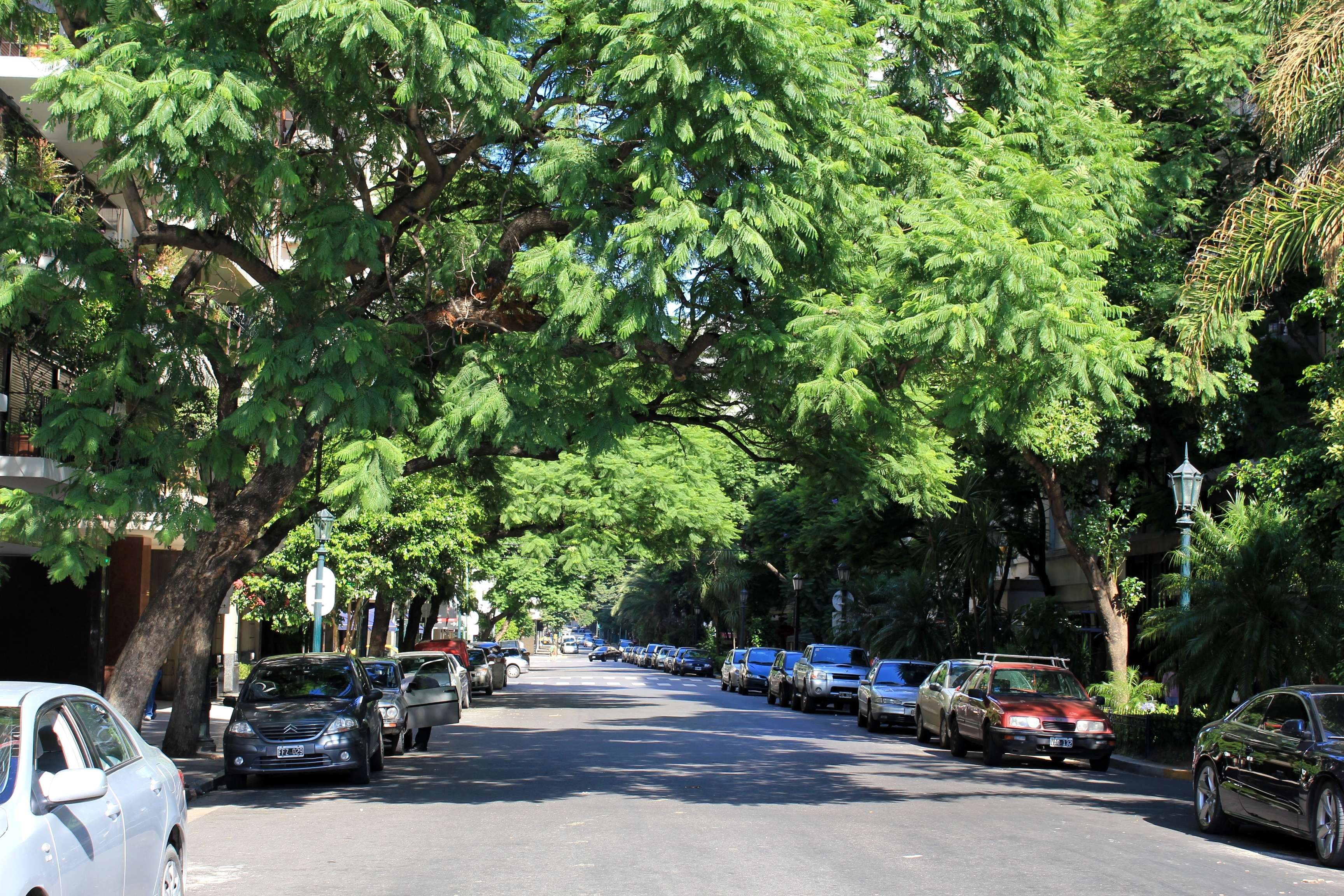
This is particularly dangerous in Buenos Aires because the city is so
beautiful that you walk with your head-up constantly “scanning” facades
of almost every second building. You see these rich decorations,
beautiful balconies, towers, sculptures…you name it… and then “Ouch” -
(it hurts). So the suggestion is to frequently switch your object of
attention when walking in BA.
Argentina Information and Pictures: Typical street in Buenos Aires - tunnel of high rising trees "softens" the impact of asphalt.
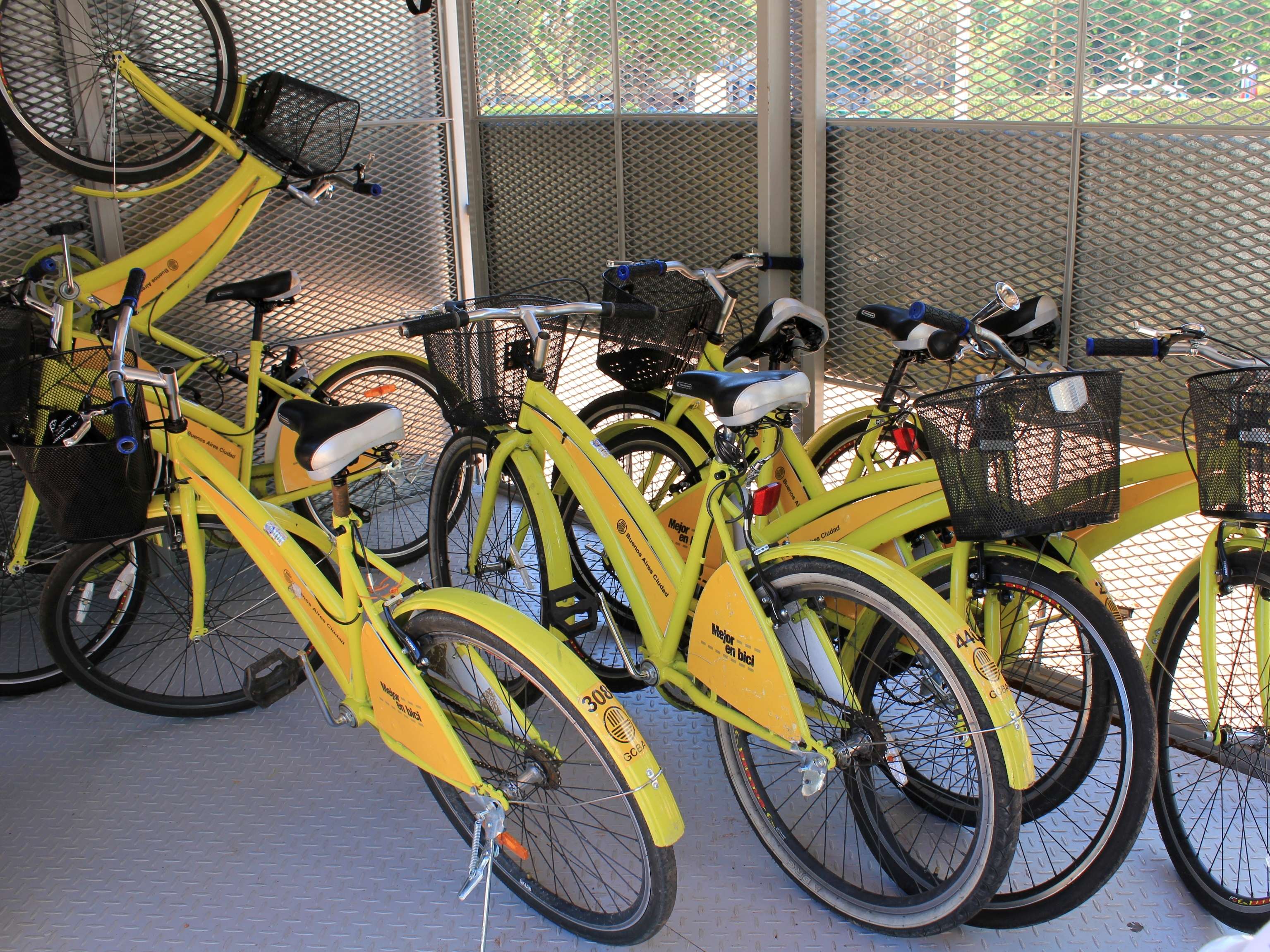
- Recently city of Buenos Aires started to promote biking in the city. Currently there are about 40km (24 miles) of protected biking lanes throughout the city and the network is quickly growing. Government sponsored offices make bikes available for free for Argentinians. But there is also a growing number of privately operated bike-rental businesses offering city tours for visitors (accompanied by guides). In general, due to the heavy traffic, not many biking lanes and fact that local drivers are “chronically predisposed” to violate your pedestrian rights, biking in Buenos Aires is not highly recommended. As usually - there are exceptions and one of them is the Reserva Ecologica (Ecological Reserve) – a vast park behind the Puerto Madero where kilometers (miles) of unpaved trails may be too much for walking.
 |
 |
 |
| full size: 2.01MB | 4.26MB | 1.95MB |
Argentina Information and Pictures: Biking in Buenos Aires
Left - map showing biking rentals;
Center - bikes ready for the ride...
Right:
bike lanes and streets crossings marked in green seem to be well
visible. But it is still a matter of portenos' driving culture that
determines the safety for bikers.
I hope that this Argentina Information and Pictures page offered you many valuable tips. Now - "armed" with knowledge about the public transport you are ready "for the ride" in Buenos Aires.
However you may also consider the next pages to learn more about your future destination in South America.
If you want to read more travels tips to prepare yourself for vacation
in Argentina then please select one of the following links:
Guide for Argentina's visitors: Food and Restautants (page 1)
Security and Financial Tips in Argentina (page 3)
Capital of Argentina - Buenos Aires (page 4)
Buenos Aires People (page 5
Not sure yet where to go and what to see in Argentina? You may find help selecting: Tourist Destinations in Argentina
However if you are falling in love with Buenos Aires (I do not blame you, it happened to me) then please select: Buenos Aires Walking Tours
.
Recent Articles


-
Santa Cruz de Tenerife | Colonial Past mixed with Modernity
Jul 20, 20 10:05 AM
Tenerife (Canary Islands) - time for discovering Santa Cruz, a town where the colonial past is mixed with the modern day capital city….
-
San Cristobal de la Laguna | Tenerife
Jul 05, 20 05:49 PM
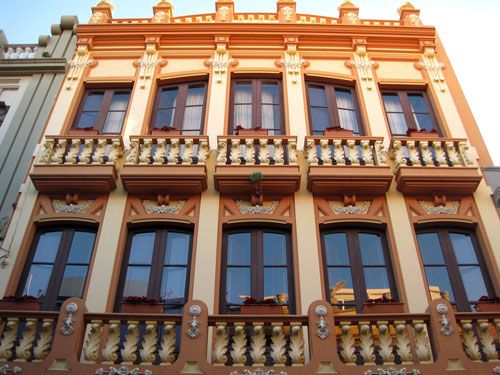
The tour of Tenerife (Canary Islands)- From the old, colonial time streets of Laguna, Santa Cruz, Icod de los Vinos to the new tourism oriented Los Cristianos.
-
Great Apes| Loro Parque Tenerife
May 24, 20 02:15 PM

The world of Great Apes - gorillas, chimpanzees and orangutans in “almost natural” settings of Loro Parque

If you have any questions and/or suggestions regarding this website please contact us using the following form:
Yours truly
Tom