Roman Amphitheater
Top Sites to See in Syracuse
Ancient Roman Amphitheater in Syracuse was one of the largest in the Roman Empire, successfully rivaling the famous Colosseum, although today it is hard to realize it…
The roots of the Roman Theater probably date back to the 3rd century BC, but it took its final form at the “peak” of Roman Empire somewhere during the 2nd -3rd century AC. At the time it was one of the largest Roman amphitheaters in Italy with the elliptical diameters of 460 x 390 feet (140 x 119 meters). The whole complex extended to the area of the church of San Nicola at the entrance to the Archeological Park where are still visible water tanks used to feed the amphitheater.

Ruins of the Roman Amphitheater
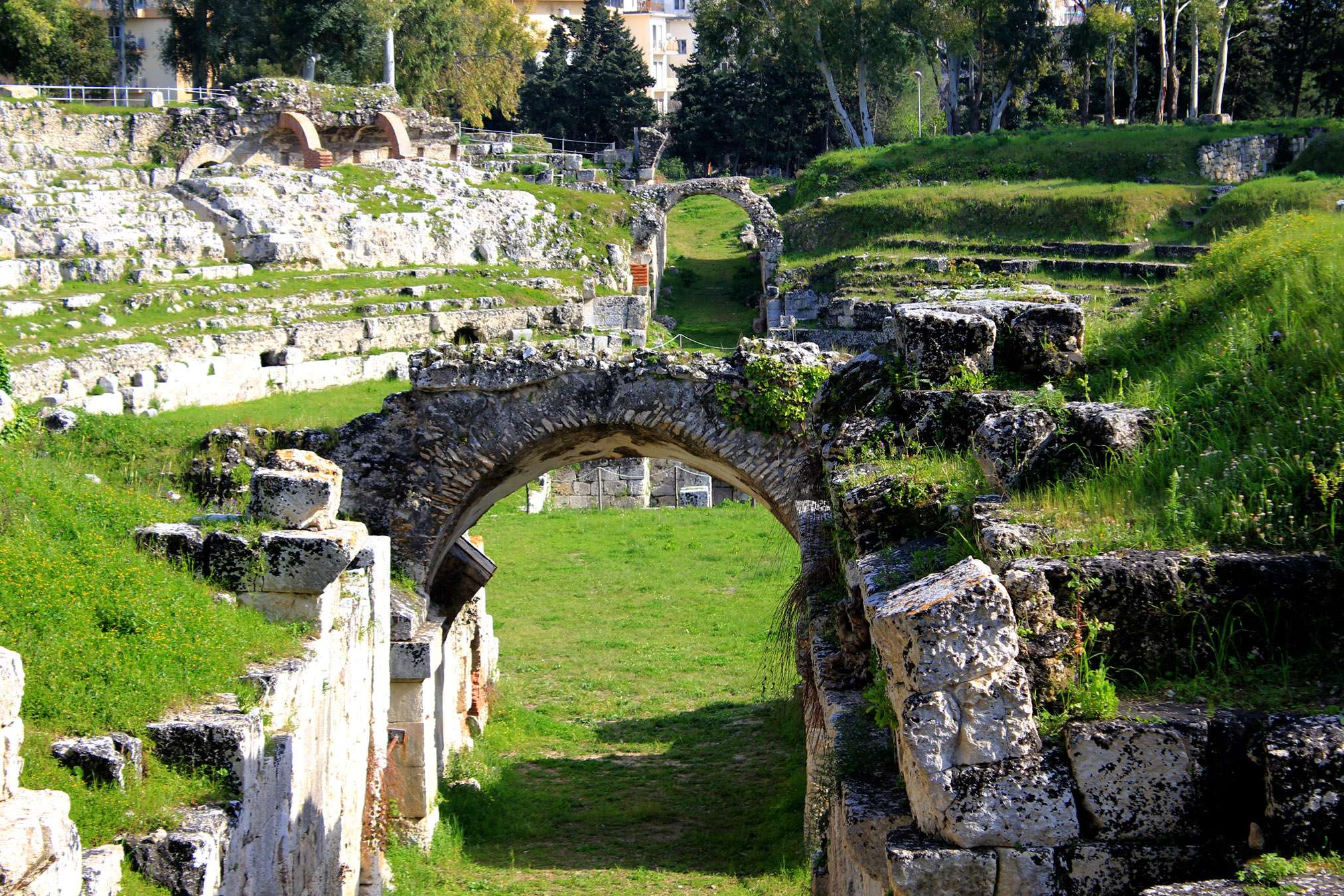
Entrance to the arena
Apparently this amphitheater complex could rival Rome’s Coliseum, although today it may be hard to realize given the current state of the ruins.
Contrary to its nearby Greek’s counterpart that used the natural settings of the Temenite hill slope, Roman one was rather a massive “standalone” oval structure. Major part of its auditorium was built from blocks of rock standing above the ground level and supported by immense walls.
Such concept probably gave more degrees of freedom to architects and engineers but at the end it contributed to its fall and “disappearance”. During the 16th century, Spanish rulers decided that this “huge pile of stones” (as they saw it) may have better use. So whatever could be moved they decided to use for reconstruction of defensive walls around the island of Ortigia. The effect was disastrous – as it can be seen today, only lowest part of the arena with few rows of auditorium survived the “assault” thanks to the fact that it was carved into the rock and so impossible to take away.

Today, we can only imagine how gigantic was the amphitheater complex
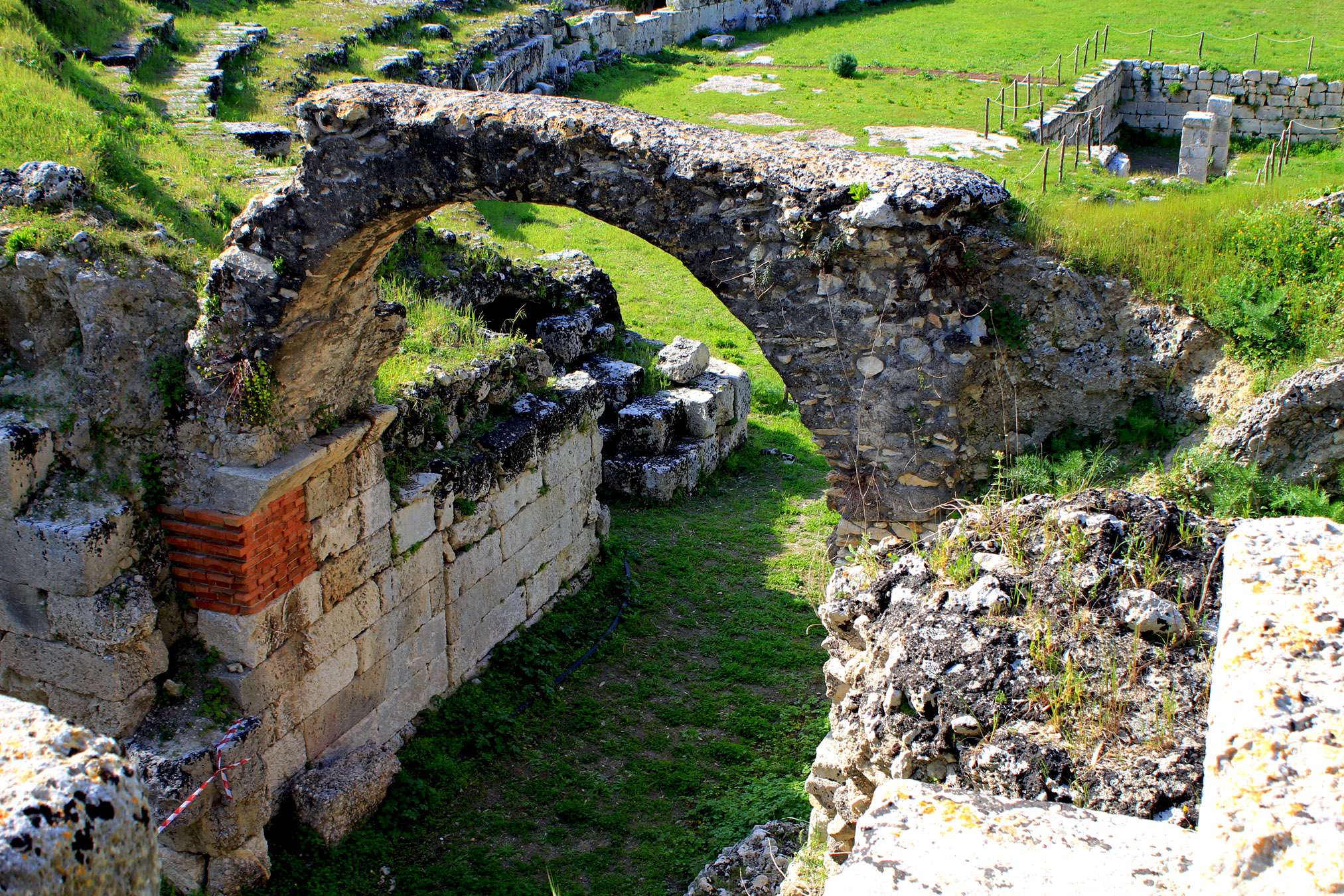
Another view on the entrance to the arena
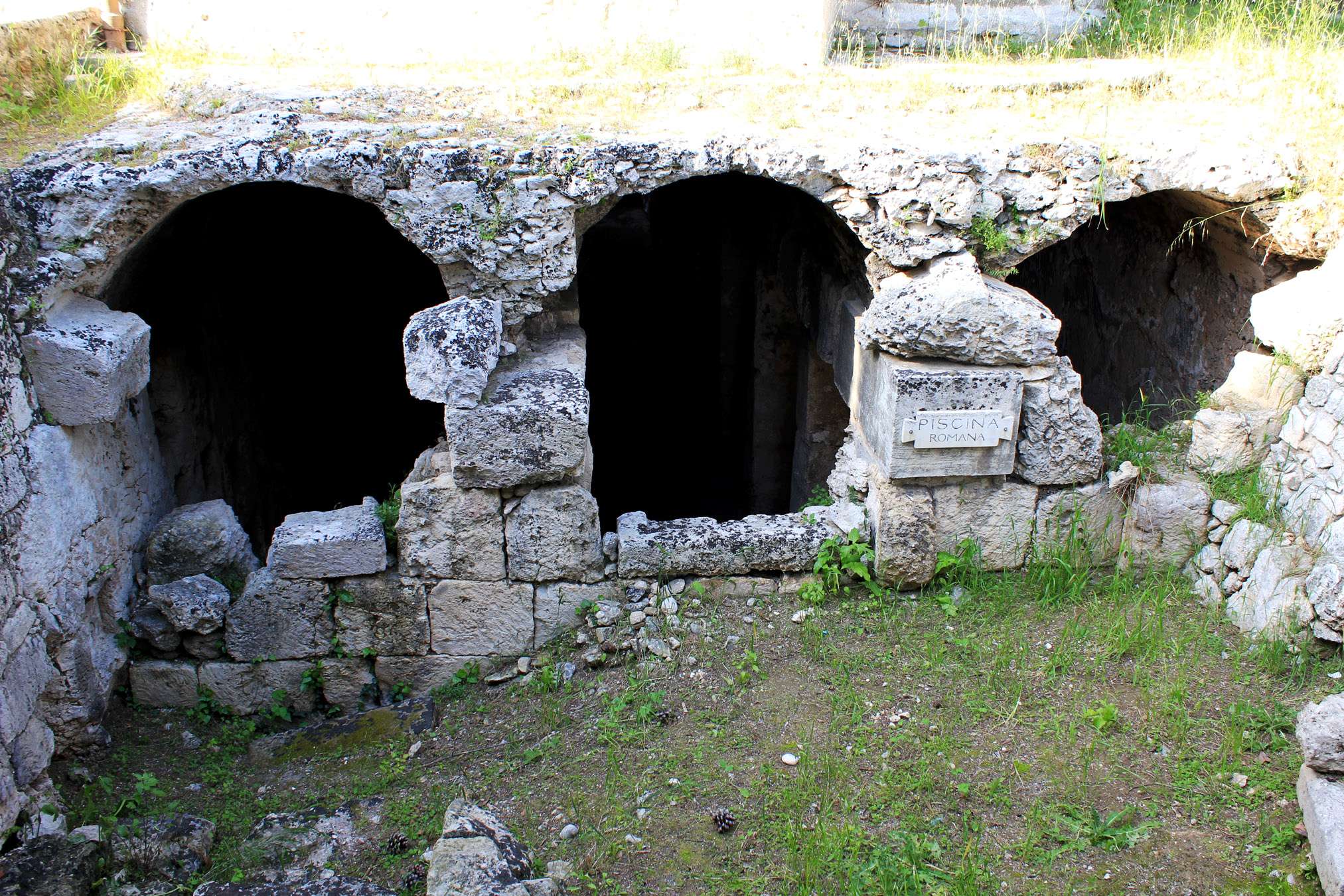
Roman baths were part of the complex, now there are far away from surviving millennia ruins of the arena
Like most Roman arenas, the amphitheater in Syracuse was designed and used mostly for bloody events (nearby Greek theater was used for theatrical performances). Characteristic set of corridors and gates opening to arena and providing “one-way” entrance for unfortunate gladiators and beasts is still visible today below the ground level…
Go back to: --> Top Sites to See in Syracuse
If you enjoyed this visit, then please share your experience with friends :-)
.
Recent Articles


-
Santa Cruz de Tenerife | Colonial Past mixed with Modernity
Jul 20, 20 10:05 AM
Tenerife (Canary Islands) - time for discovering Santa Cruz, a town where the colonial past is mixed with the modern day capital city….
-
San Cristobal de la Laguna | Tenerife
Jul 05, 20 05:49 PM
The tour of Tenerife (Canary Islands)- From the old, colonial time streets of Laguna, Santa Cruz, Icod de los Vinos to the new tourism oriented Los Cristianos.
-
Great Apes| Loro Parque Tenerife
May 24, 20 02:15 PM

The world of Great Apes - gorillas, chimpanzees and orangutans in “almost natural” settings of Loro Parque
Discover Sicily
Dear Visitor:
If you have any questions and/or suggestions regarding this website please contact us using the following form:
Yours truly
Tom